Author of this article:Fiona
In the context of rapid cross-border business expansion,customerdataHas become one of the most important and sensitive assets of a company。 Whether it is customer information obtained through WhatsApp, Facebook, official website forms or emails, it involves personal privacy, transaction records and communication content. Once improperly managed, customer trust will be damaged, heavy fines and title risks will be faced, and even the continuous operation of cross-border business will be directly affected.
Especially at a time when global privacy regulations such as the GDPR and CCPA are becoming increasingly stringent, data security is no longer just a technical issue, but a business foundation that cross-border companies must face up to.
Practice has proved that to ensure the efficiency of customer acquisition and conversion while doing a good job of data security and privacy compliance, the key is not to increase the cost of labor control, but to pass compliance and professionalSystem tools, Unify customer data into a controllable and auditable management system.
This article will start from the real pain points of cross-border enterprises and disassemble a set of landing and scalable solutions.
1. In cross-border business, why do customer data risks frequently get out of control?
For many cross-border companies, customer data risks are often not “completely unaware”, but stem fromLong-term tool dispersion and out-of-control processes。
Customer information is scattered in different channels and personal accounts such as WhatsApp, Facebook private messages, e-mail, forms, etc., and there is a lack of unified management. Once personnel changes or accounts are abnormal, data may be lost or even leaked. At the same time,Account sharing, Private export of customer information, saving chat records on personal devices and other behaviors are common, but it is almost impossible to trace responsibility.
What's more complicated is that the requirements for data compliance in different markets vary significantly. Many teams start to use customer data without fully understanding the privacy rules. Once they encounter complaints or reviews, the risk will explode. Coupled with concerns that “safety will reduce efficiency”, companies often repeatedly compromise between convenient operation and compliance management, and have never formed a long-term plan.
These problems are superimposed on each other and essentially point to the same root cause.:Customer data is not included in a unified and controllable management system。 To truly reduce risks and take into account efficiency, what cross-border companies need is not more rules, but toProfessional toolsIt is the core customer data management center, so that the data is in a visible, manageable, and auditable state from generation, use to retention.
Use Mixdesk AI customer service system: reduce costs and save money, improve efficiency and fill up
With the help of Mixdesk, one-click deployment of ChatGPT/DeepSeek-blessed AI customer service, custom speech techniques, replacing 70% + basic consultation; data insight + one-stop operation in the background.
2. From the dispersion of tools to a unified hub: build a controllable and compliant data management system
- Establish a unified customer data management hub
Mixdesk has built-in multi-dimensional data analysis + AI insight, real-time tracking of customer service operation and transformation data, and intelligent report output of key trends to help enterprises data optimize services and efficiency.
For cross-border enterprises, the first step in customer data security is not to continuously add new security tools, but to first solve the problems of decentralized data sources and disordered management. As long as the data is still scattered in different accounts, different platforms, and personal devices, no matter how strict the system is, it will be difficult to truly implement it.
Unify customer data from WhatsApp, Facebook, independent online customer service, e-mail and other channels into a centralized management platform, which can fundamentally reduce the risks of information fragmentation and repeated storage. In a unified system, the basic customer information, historical communication records, source channels, and current follow-up status will be automatically integrated to form a continuous and complete customer portrait, rather than scattered in an employee's chat window.
In this way, data is no longer attached to personal accounts or operating habits, but is precipitated into controllable and traceable assets of the enterprise. like Mixdesk Such an omni-channel customer communication platform is precisely throughUnified access and centralized management, Help enterprises gather the originally decentralized dialogue and customer information into the same hub, and lay the foundation for subsequent rights control, compliance management, and security audits.
- Use the division of permissions and roles instead of “everyone can see”
Many companies have problems with data security, not because of external attacks, but because internal permissions have been in a state of “full openness by default” for a long time. Everyone can view, export and even transfer customer data, which seems convenient, but in fact it is extremely dangerous. Truly effective security management is not equivalent to “locking” all operations, but through a clear division of roles, everyone is only exposed to the range of data related to their own work.
For example:
- Customer service can only view conversations and basic information
- Sales can view customer intentions and historical records
- The management has the authority of data statistics, process configuration, and risk monitoring
- High-risk operations such as export and deletion should be set up with additional permissions or approval mechanisms to avoid being triggered at will
Through this hierarchical authority design, enterprises can not only ensure the work efficiency of front-line personnel, but also firmly control sensitive data within a manageable range. Mature customer service and customer management systems like Mixdesk have built-in complete roles and refined authority models, which support flexible configuration of visible scope and operating authority by position. Enterprises do not need to develop their own, so they can significantly reduce internal data leakage and misoperation without increasing the management burden.risk.
- Use systematic tools to reduce "man-made risks”
A large number of privacy and data risks often do not originate from subjective malice, but are the cumulative result of long-term operating habits. Manually copy customer contact information to local documents, save chat screenshots privately, and use personal accounts to communicate with customers. These behaviors seem to be “convenient” in daily work, but the data is constantly out of the control of the enterprise. Once personnel change or equipment is lost, the risk is almost impossible to recover.
To truly reduce such hidden dangers, the key lies not in repeatedly emphasizing the system, but in compressing the “gray operating space” from the source through tool design. When communication, customer management, and data precipitation are all concentrated in a unified system, employees naturally no longer need or are allowed to retain information through personal methods, business operations will be automatically recorded, and the boundaries of responsibilities will be clear.
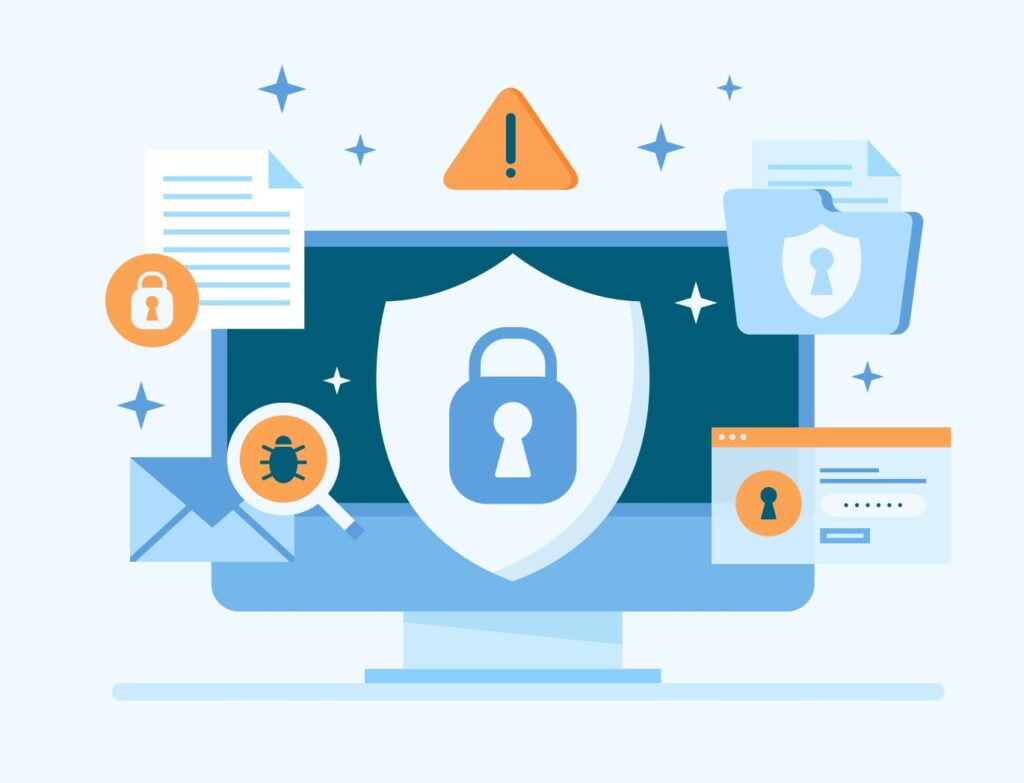
Under this model, customer data is no longer scattered in personal devices or private accounts, but is always managed and traced uniformly as enterprise-level assets. Even if individual employees leave or their accounts are changed, business continuity and data integrity will not be affected. Some mature integrated customer service systems have been able to realize this “centralized hosting, process traceability, and controllable authority” management method without increasing the complexity of operations, so that compliance and efficiency no longer conflict with each other.
- Reserve security flexibility for future expansion
A distinctive feature of cross-border business is its fast-paced growth and frequent changes. When many teams were small in the early days, they felt that “simple tools are enough first”, but when the personnel, market, and channels expand rapidly, the management methods that were originally barely available will soon become hidden dangers.
Therefore, customer data management solutions need to have sufficient security flexibility and expansion space from the beginning. It must not only support the continuous increase of accounts, channels, and team members, but also maintain clear data attribution, authority boundaries, and compliance controls even after the organizational structure becomes complicated. For example, the access scope of teams in different countries, the operating authority of different positions, and the data isolation of different business lines should all be flexibly configured in the same system, rather than being overturned.
Because of this, more and more cross-border companies are choosing to introduce more professional and systematic management systems at an early stage, rather than relying on scattered tools to temporarily stitch together. like Mixdesk This kind of platform designed for growth enterprises reserves the ability to expand in parallel with multiple accounts, multiple roles, and multiple channels, allowing enterprises to scale up without repeatedly migrating data or reconstructing processes. Maintain a stable balance between efficiency and security.

Mixdesk is an overseas multi-channel intelligent customer communication platform that can unify multiple channels such as Facebook, Instagram, WhatsApp, Line, Telegram, and Email to help companies communicate and serve customers. Mixdesk also supports AI employee functions, allowing enterprises to achieve more efficient automated customer service.
3. Summary: Turn data security into an essential ability, not an after-the-fact remedy
In the cross-border business environment, customer data security and privacy protection are no longer ”icing on the cake" plus points, butThe underlying ability that determines whether an enterprise can operate for a long time。 A truly mature company does not remedy a problem after it has gone wrong. Instead, through systematic tools and clear processes, every aspect of data from generation, use to retention is in a visible, controllable, and auditable state, so that risks are controlled at the source.
When customer data is centralized, secure, and traceable, team efficiency will be higher.,Customer trustIt is also easier to accumulate. Choosing the right systems and methods is not only for compliance, but also for growth to be based on a stable and sustainable foundation.
When data security becomes a "default state”, companies can safely invest their energy in market expansion, product optimization and customer value growth to achieve sustainable long-term operations.
FAQ
Q1: Is it necessary for a small team to do systematic data security management?
A: It is necessary. In fact, data risks are often more likely to occur in the small team stage, such as multiple people sharing accounts, data relying on personal operating habits, etc. Once the business grows or people move, these hidden dangers will be rapidly magnified. The sooner a unified data management hub is established, the lower the cost of later expansion.
Q2: Will strengthening authority and compliance management affect the efficiency of customer service and sales?
A: No, the premise is to use a suitable system. A reasonable division of roles and authority is essentially “each performs its own duties”, rather than adding operational steps. Mature customer communication platforms (such as Mixdesk) usually have embedded permission logic into the process, which can reduce misoperation and repeated communication.
Q3: How to deal with the privacy compliance requirements of different countries and regions?
A: The key is to build a set of compliance data management mechanisms. Through the use of professional systems that meet compliance requirements, customer data is stored centrally, called uniformly, and access rights, scope of use, and operation behavior are clearly restricted and recorded.
Q4: What kind of tools are suitable as a data management hub for cross-border enterprises?
A: The ideal system should have unified multi-channel access, centralized precipitation of customer data, refined rights management, and good expansion capabilities. Some cross-channel customer service and customer management platforms (such as Mixdesk) are designed around cross-border business scenarios, which can improve communication efficiency while internalizing data security and compliance into system capabilities.